
How to Remind Parents About Their Child's Six-Month Dental Checkup
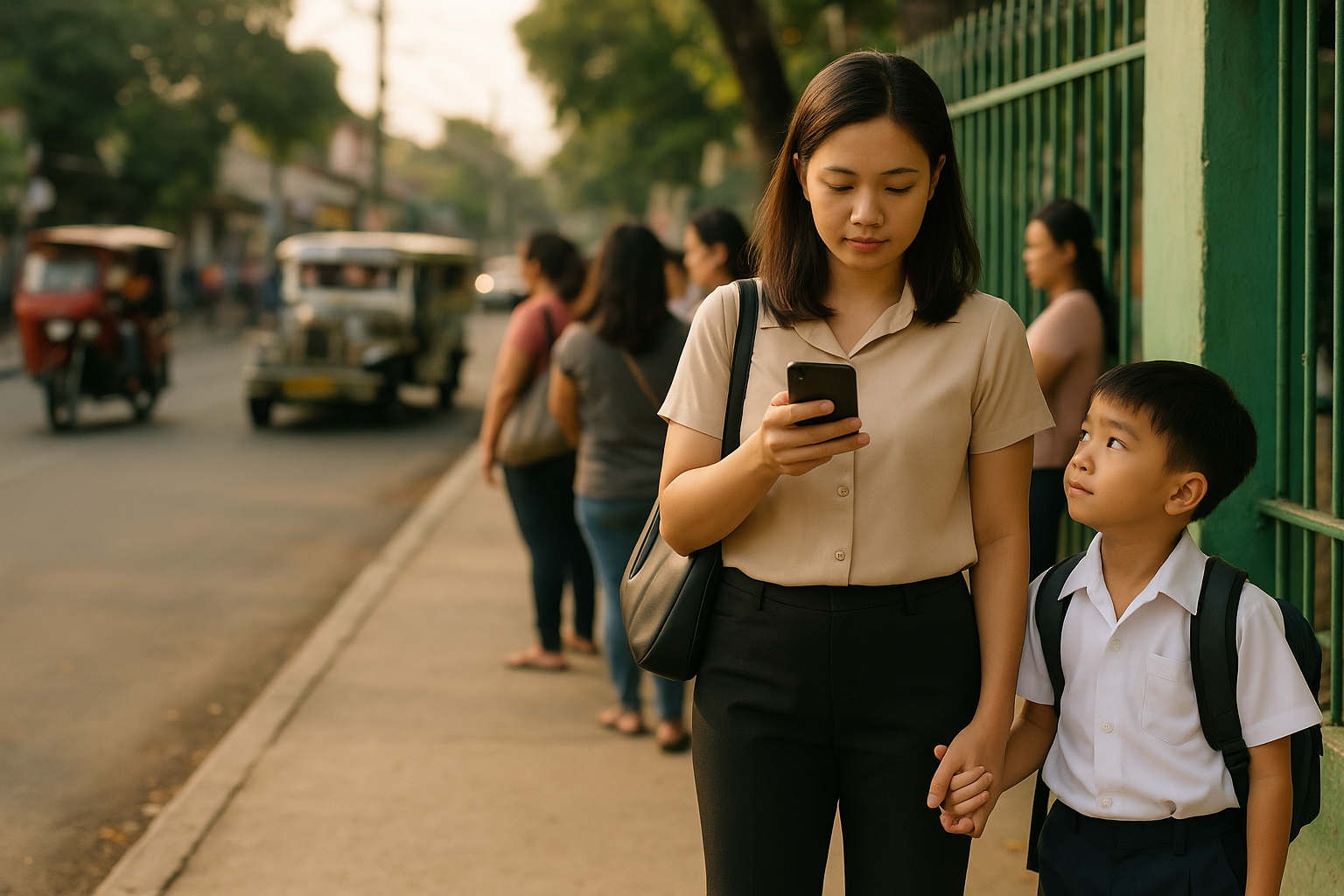
Paolo Reyes is seven, and the recall list at Smile & Skin Clinic says he's due for a check-up on 20 October. The number on his record is his mother's. Ms Reyes works in Mandaue until six and Paolo is in class until four, so the first time they're both free is a Saturday morning.
An adult's recall asks one person to find an hour. A child's asks a parent to find one that the job and the school timetable both leave open, and your clinic has far fewer Saturday slots than it has children due.
Most of what decides whether Paolo comes back happens before anyone writes the text.
The short answer
- Text the parent and name the child. "Hi Ms Reyes, Paolo is due" works. "Hi Paolo" lands on his mother's phone and reads like a wrong number.
- Book the next visit before the family leaves. A child who already has a date needs an appointment reminder, not a recall.
- For everyone else, send the first recall three to four weeks before the due date. After-school and Saturday slots fill first.
- Offer times a schoolchild can make, or send a booking link. Don't ask the parent to reply. A text from a sender name like SmileSkin can't receive one.
- Send one message per household. If siblings are due within a few weeks of each other, put them in one text and on one Saturday.
- If nothing's booked, send a second message about two weeks after the due date and a last one at around six weeks. Then leave it until the next school break.
- Use the due date the dentist set. Six months is the habit, not the rule.
What changes when the patient is a child
The person reading the text isn't the patient. It lands on a parent's phone, or a lola's, or whichever number went on the form at the first visit three years ago. Address the child and the parent has to work out what you mean. Address the wrong adult and it goes nowhere.
School sets the hours. An adult can take a long lunch. A Grade 2 pupil can't come in at 10 AM on a Tuesday without missing class, so the times that work for children are a thin slice of your week, after school and on Saturdays. Every child on your list wants that same slice.
And families come in batches. One mother's phone might be the contact for three of your patients. Three recalls to that phone in one afternoon looks careless, and three separate trips to the clinic is exactly what she's trying to avoid.
So the template is the last thing to fix. Start with the record.
Step 1: Get the record right at the visit
The text goes to whoever's on the record, so the record has to be right. The standard patient form leaves out most of what matters for a child. Add these fields and fill them in while the parent is still at the desk.
| What to record | Example | Why |
|---|---|---|
| Who books | Ms Reyes, mother | The name the text is addressed to |
| Whose phone gets the text | Ms Reyes's mobile, not Paolo's | A parent's number tends to outlast a child's first phone |
| Who brings the child | Lola, on Saturdays | Tells you which days are realistic |
| Siblings who are also patients | Bea, 10 | So their due dates can share one message |
| School shift | Morning shift, out by 12:30 | Opens weekday afternoon slots you'd otherwise rule out |
| Next due date | 17 April 2027, set by the dentist | The date the reminder runs on |
Ask about the shift. Plenty of public schools still split classes into morning and afternoon shifts, and a child on the morning shift can come in at 2 PM on a Wednesday.
If the parent who books works abroad, ask who the text should go to here. A reminder that lands in Riyadh can't take Paolo to the dentist.
You're also keeping a minor's details and an adult's number on one record. Collect only what you'll use, and tell the parent what it's for. Our piece on the Data Privacy Act and clinic messaging covers the rest.
The due date comes from the dentist
Six months is a habit more than a finding. The 2020 Cochrane review of dental recall intervals found not enough reliable evidence about how often children and adolescents should see a dentist. The UK's NICE guideline on dental recall does put numbers on it. The dentist picks 3, 6, 9 or 12 months for anyone under 18, based on that child's risk, and never more than 12.
So the reminder runs on whatever date the dentist wrote down. Some children get asked back at three months and some are fine at nine. That isn't the receptionist's call, and it shouldn't be a default buried in the software either. Our guide to building a recall system covers getting that date recorded at the chair.
Step 2: Book the next visit before they leave
The best reminder for a child's check-up is an appointment that already exists. If the family leaves with a date, the recall turns into an ordinary appointment reminder, a text the day before and another an hour ahead, and the parent has nothing to decide.
Some of those bookings will move. Nobody knows their April schedule in October. Moving an appointment is still easier than making one from scratch, for the parent and for whoever's at the desk.
Jen at Smile & Skin Clinic asks at checkout:
"Book na po natin si Paolo sa April? Bakasyon na nila 'yon. Pwede pa naman pong ilipat kung magbago ang schedule ninyo."
The parents who say "text n'yo na lang po kami" go on the recall list. The rest of this article is about them.
Step 3: Time it around the school year
The public school year for 2026-2027 opened on 8 June 2026 and closes on 8 April 2027 (Philstar). It runs in three terms. The second ends with assessments in early December, just before the holiday break, and classes resume in January (DZRH). Private schools may adopt the same calendar.
That leaves two long breaks, Christmas and April to May. The rest of the year, children come after school or on Saturdays.
Count six months forward from those breaks and you can see the problem:
| Last visit | Six months later | What the family is dealing with | What to offer |
|---|---|---|---|
| April to May, summer break | October to November | Mid-term, so weekdays are school | Saturdays and after school, or ask the dentist whether the Christmas break works |
| Late December, Christmas break | June to July | School opening, enrolment, uniforms and books | Saturdays, and send early |
| During term | During term | An ordinary school month | Saturdays, after school, and afternoons for morning-shift pupils |
A six-month cycle keeps landing children in the middle of a term. There are two ways out, and it's the dentist's call which one:
- Keep the date and ration the Saturday slots. The next section shows how.
- Move the date onto a break. If the dentist is comfortable letting a particular child go seven or eight months, the next visit can fall in December or April, when the parent has time. NICE's range for under-18s goes up to 12 months, so there's room for that judgement. A child the dentist wants back at three months doesn't get stretched to suit the calendar.
Count your child-friendly slots before you send
Here's a worked example, with made-up numbers. Say Smile & Skin Clinic sees children on Saturdays from 9 AM to 4 PM with an hour off for lunch, and on weekdays from 4 to 6 PM. With one dentist seeing children at 45 minutes a visit, that's 8 Saturday slots and 2 each weekday, 18 a week.
If 60 children come due in October, that's more than three weeks of child-friendly time, before a single adult asks for a Saturday.
So send in weekly waves sized to those slots, starting three to four weeks before the due dates. Each wave finds Saturdays still open, instead of sixty parents chasing eighteen slots in the same week. If half of a wave doesn't book, make the next one a bit bigger. Our guide to automating dental patient recalls goes further into matching the queue to your chairs.
The hour matters too. The NTC bars broadcast texts between 9 PM and 7 AM. For parents, we'd send at 10 AM or between 7 and 8 PM, once the kids are settled. Skip 7 AM, when it's uniforms and baon. The best time of day to send recall messages has the reasoning.
Step 4: Write the message for the parent
Put in:
- the parent's name and the child's name
- what the visit is, in plain words, like "check-up and cleaning"
- times a schoolchild can make, or a link that shows them
- every sibling who's due
- your clinic's name, in the message as well as the sender ID
Leave out:
- Scare lines. "Cavities spread fast!" won't get Paolo in any sooner. It makes his mother feel told off, and she'll be slower to open your next text.
- Clinical detail. The dentist explains fluoride and sealants in the chair. A 160-character text isn't the place.
- Any request to reply. A text from a sender name can't receive one, so "Reply YES" goes nowhere.
Five messages that fit in one text
All five use plain characters, so one SMS holds 160 of them. The count is everything before the link, including the space. Booking links often run 40 to 60 characters, and each sample leaves room for at least 50.
First recall, three to four weeks before the due date (105 characters):
Hi Ms Reyes, Paolo is due for his check-up at Smile & Skin Clinic. Saturday and after-school slots here: [link]
The same, in Taglish (109 characters):
Hi Ms Reyes! Due na po si Paolo sa check-up sa Smile & Skin Clinic. May Saturday at after-school slots kami: [link]
Two siblings due together (105 characters):
Hi Ms Reyes, Paolo and Bea are both due for check-ups at Smile & Skin Clinic. Book them on one Saturday: [link]
Second message, about two weeks after the due date (100 characters):
Hi Ms Reyes, Paolo is still due for his check-up at Smile & Skin Clinic. Open Saturdays this month: [link]
Last message, about six weeks after (104 characters):
Hi Ms Reyes, last reminder for Paolo's check-up at Smile & Skin Clinic. Christmas break slots are here: [link]
Two notes. Only write "open Saturdays this month" if there are some, because a link to a full calendar is worse than none. And swap "Christmas break" for whichever break is coming next.
Step 5: Follow up, then stop
| When | What to send | Then |
|---|---|---|
| 3 to 4 weeks before the due date | First recall, with times or a link | It goes out in that week's wave |
| About 2 weeks after the due date | The shorter second message | Send it at a different hour from the first |
| About 6 weeks after the due date | The last message, pointing at the next school break | Mark the child as waiting for that break, and stop |
| 2 to 3 weeks before that break | One fresh recall | Breaks are when parents finally have time |
Three messages, then stop. That's our own rule of thumb, and no study backs a number. Past the third, each extra text costs more goodwill than it's likely to earn, and a parent annoyed enough to block your sender name won't get your next appointment reminder either.
Some parents will message your Facebook page instead: "Magkano po kung dalawa sila?" The recall itself has to go by SMS, because it reaches the parent months after their last message, far outside Messenger's 24-hour window. SMS, Messenger or Viber explains why. The questions it raises come back wherever the parent prefers to type, and somebody has to be there to answer.
Common mistakes
Writing to the child. "Hi Paolo! Time for your check-up" arrives on his mother's phone and reads like it was meant for somebody else.
Sending one text per sibling. If the list is sorted by patient instead of by family, the same mother gets three texts in an afternoon.
Offering only school hours. If every time in the text is a weekday morning, the parent has to call and ask for something else. Some will. A lot will mean to.
Sending the whole list on the first of the month. The Saturdays go in a day, and everyone after that hears "full na po".
Trusting the number from the first visit. Parents change SIMs. Check the number at every visit, the way you'd check the address.
Treating six months as the rule. If the dentist wanted a child back at three months and the reminder goes out at six, nobody notices the missed visit.
Where OtterFlow fits
OtterFlow's recurring SMS reminders handle the recall itself. Each one is a person, a start date, a rhythm, a time of day, and an optional booking link to a service. For a child, save the parent as the person and type the child's name into the message. Every reminder keeps its own copy of the text, so one reminder can name both siblings and the household still gets a single text. Set the start date to the due date the dentist chose, not six months from today.
When Ms Reyes taps the link, she sees times that are genuinely open and books one. The confirmation goes out straight away, then a reminder the day before and another an hour ahead. If she messages the clinic's Facebook page instead to ask how much it is for two kids, Flo answers from what the clinic approved, in English, Taglish or Bisaya, and hands anything clinical to a person.
If you'd like to see that running on your own recall list, book a 15-minute demo.
Questions clinics ask
When should the reminder go to the patient instead of the parent?
Once they turn 18. Ask for their own number at their first visit after the birthday. Until then the parent usually pays and drives, so the text belongs on the parent's phone.
What if the parents are separated?
Ask at the desk which one books, and text that parent. Don't text both unless the family asks you to, or you may end up with the same child booked on two different Saturdays.
Should the recall mention fluoride or sealants?
Only if the dentist recommended them for that child at the last visit, and then just by name. The explaining happens in the chair.
Start with the summer list
Children who came in during the April and May break come due in October and November, in the middle of the second term. Pull up that list first. Count your Saturday and after-school slots for the next four weeks, send the first wave to as many parents as you have slots for, and book each child's next visit before they walk out. If you'd rather the reminders went out without anyone at the desk sending them, the 15-minute call below is where that starts.