
How to Follow Up on Patients Who Did Not Accept Their Treatment Plan
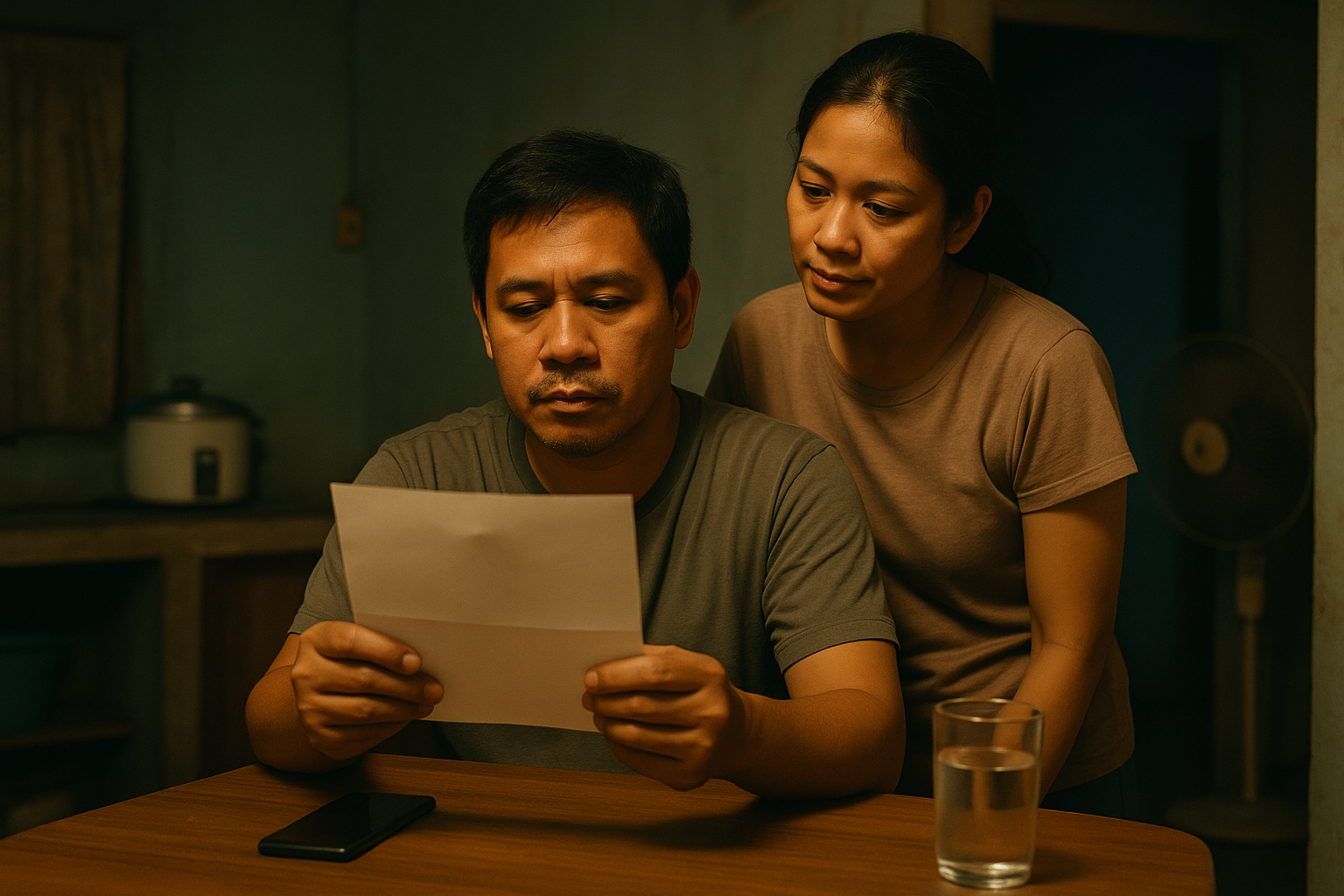
Mr Cruz sits up in the chair while the dentist at Smile & Skin Clinic walks him through his x-ray. Two fillings, then a root canal on a lower molar with a crown to finish it. At the front desk Jen writes out the quote. He reads the total, folds the paper in half, and says the line every clinic hears most weeks.
"Sige po, pag-iisipan ko muna."
He walks out and nothing else happens. Nobody calls, because nobody wants to sound pushy. The reminder system has nothing to send, because there's no appointment. His name isn't on any list anyone checks. Seven months later he's back at the desk, holding his jaw.
That line is rarely a no. Usually it means not today, for a reason the patient didn't say out loud. Payday is still a week away. His wife handles the money. He thinks his HMO might cover part of it. Or the tooth doesn't hurt yet, so nothing about it feels urgent. The follow-up worth sending finds out which of those it was and deals with that, then leaves the decision with him.
The short version
- Write down the reason before the patient leaves. One line. Without it, every follow-up can only say "just checking in".
- Hand over the plan in writing, split into what should happen first and what can wait, with the fee for each part.
- Ask if you can follow up, and when. "After sahod" is an answer you can put on a calendar.
- Send the first follow-up two or three days later, from a named person, about the reason they gave.
- Send the second around the date they named, with a booking link.
- For big-ticket work, phone at about a month. Then stop and move them to your recall list.
- Clinical questions go to the dentist. Nobody at the desk argues about whether a root canal is necessary.
- Don't discount to close. The dentists' Code of Ethics rules out promotional rates.
What "pag-iisipan ko muna" usually means
Ask patients why they turned down treatment and the same two answers come up first: cost, then fear. A 2016 survey of 200 prosthetic patients at a dental college in India found that 164 of them declined the plan their dentist proposed. Cost was the most common reason, at 23.2%, with fear of treatment and not seeing the need tied at 17.1%.
Closer to home, reporting on the Department of Health's 2018 oral health survey lists the barriers Filipinos face to dental care as cost (54.8%), fear (22.8%) and busy schedules (14.3%). That's about going to the dentist at all rather than accepting a plan, and I couldn't find the DOH report itself online, so take the exact figures with some caution. Anyone who has worked a front desk here will recognise the order, though.
What patients say at checkout is the polite version of those reasons, and each one needs a different follow-up:
| What the patient says | What it often means | What the follow-up should carry |
|---|---|---|
| "Pag-iisipan ko muna" | Usually cost. Sometimes fear, or someone else has to agree | The plan in writing, split into phases, so the first step looks smaller |
| "After sahod na lang po" | The money exists, it just isn't here yet | A message timed for after payday, with open times |
| "Itatanong ko muna sa asawa ko" | Someone else decides, and they weren't in the room | Something the spouse can read, and an offer to talk to the dentist |
| "Covered ba 'to ng HMO ko?" | They don't want to pay for something the plan might cover | A real answer, once you've checked |
| "Hindi naman masakit" | They don't see why it can't wait | A conversation with the dentist, not the desk |
| "Natatakot po ako" | Fear, often from a bad visit years ago | What the visit actually involves and how long it takes |
| "Busy po ako" | Time off work is the real cost | How many visits, how long each one is, and whether you open Saturdays |
So ask at checkout, gently: "May concern po ba kayo, sa budget o sa schedule, para matulungan namin?" Most patients will tell you. If one won't, write "didn't say" and let the written plan do the work.
The follow-up starts before they leave
Most of what decides whether a patient comes back happens in the two minutes at the front desk.
1. Write down the reason. One line in the record or the logbook: "Cost, waiting for the 30th." "Asking wife." "HMO, we're checking coverage." Plenty of clinics write down the plan and never the reason, which is why their follow-ups end up saying nothing in particular.
2. Give them the plan in writing. What the dentist recommends, why in one line in the dentist's own words, how many visits, and the fee for each part. The Code of Ethics for dentists already says the dentist "must discuss the treatment plan, options, and corresponding fees for the proposed treatment options." Writing it down, or sending a photo of it on Messenger, gives the patient that same conversation to take home. It's also exactly what the spouse will ask to see.
3. Ask the dentist to split it. Say the plan comes to ₱28,000 and the first visit is a ₱1,500 filling. That's a much easier yes than ₱28,000. Whether any of it can safely wait is the dentist's call, and the patient should hear it before they leave. "Unahin na po natin 'yung filling, 'yung crown pwede next month" turns a maybe into a first visit.
4. Ask if you can follow up. "Okay lang po ba kung mag-text kami after ng 30th?" Write down which number they give and whether it's their own phone or the family's. That matters later.
If they're open to it, book the first visit for after payday right there, and tell them it's fine to move it. A booking they move is easier to work with than a follow-up nobody answers.
A schedule built around the reason
This is for patients who never started. Patients who started treatment and stopped halfway are a different case, covered under the unfinished-treatment trigger in how to automate patient follow-ups.
I couldn't find any study of the best interval for this, so treat what follows as practice rather than evidence. It rests on two things that hold for most patients: they remember the conversation for a few days, and many of them are paid on the 15th and the 30th.
| When | Who sends it | Channel | What it carries |
|---|---|---|---|
| Day 2 or 3 | A person, by name | Messenger if they messaged you in the last 24 hours, otherwise SMS | The written plan if you haven't sent it, and an answer to the reason they gave |
| Just after the date they named, or about two weeks | Can be scheduled | SMS with a booking link | The first visit, how long it takes, and where to book |
| About a month | A person | A phone call for anything over a few thousand pesos, SMS otherwise | One question: is something stopping them that you can help with? |
| After that | Nobody | Your recall list | The dentist looks again at the next check-up |
That's three touches, then you stop. Stop sooner if:
- they book, with you or anywhere else
- they say no clearly, or ask you to stop
- they have an open complaint with the clinic
- they message you about pain or swelling, which goes to the dentist the same day and ends the sequence
Why the channel matters
Messenger lets a clinic reply freely for 24 hours after the patient's last message, and after that the thread is mostly closed to you. We went through those rules in how to follow up with dental leads. So the day-two message only goes on Messenger if the patient has been chatting with your page. Otherwise it's a text.
A text from a sender name like SMILESKIN is one-way. Whatever the patient sends back goes nowhere, and nobody at the clinic ever sees it. So no follow-up text should ask a question the patient answers by replying. Every SMS points to a place where a conversation can happen: a phone number, your Facebook page, or a booking link.
Who says what
The front desk, or a chatbot, can handle anything logistical. Fees, number of visits, how long each one takes, payment terms the clinic already offers, and what the HMO covers once someone has checked.
The dentist handles everything clinical. Whether the treatment is necessary, what happens if they wait, what the alternatives are, and whether it'll hurt.
Staff cross that line all the time, and they mean well. "Naku, kailangan na po talaga 'yan, baka mabunot pa." That's a clinical judgement from someone who isn't qualified to make it, and the patient hears it as pressure. When a patient asks "kailangan ba talaga?", the desk's answer should be an offer: "Pwede ko po kayong i-schedule ng short call kay Doc para maipaliwanag niya."
For a big plan, five minutes on the phone with the dentist answers the question the spouse is going to ask. Three texts from the desk can't do that.
What to leave out of a follow-up
A discount to close. The Code of Ethics says it plainly: "Offering 'Promotional Rates' shall not be allowed in the practice of the dental profession." It also applies its "simple and dignified" standard to electronically generated communications, so "10% off if you book this week" fails twice. Instalment terms that every patient already gets are different, in our reading. They change when the patient pays, not how much, so mention them plainly.
Fear. "Baka lumala pa po" from anyone other than the dentist is a scare tactic.
Diagnosis on a shared phone. Health information is sensitive personal information under the Data Privacy Act. Plenty of patients give the clinic a parent's number, a spouse's, or the one phone the household shares. A text about "your root canal" tells whoever picks it up. Unless you know the number is the patient's own, keep it to "your next treatment visit" or "the plan Doc discussed". There's more on this in what the Data Privacy Act means for clinics messaging patients.
A request to reply by SMS. Covered above. It's also a mistake you'll find in a lot of follow-up templates copied from overseas.
"Just following up." If a message has no answer, no times and no link in it, don't send it.
Messages you can adapt
The SMS samples leave out the peso sign. ₱ isn't in the standard SMS character set, and one of them switches the whole text to an encoding that fits 70 characters per segment instead of 160. The arithmetic is in dental appointment reminder SMS templates. Each SMS sample fits in one 160-character text, and the one with a booking link leaves room for a link of about 50 characters. Count again with your own.
Day 2, on Messenger, if the patient has been chatting with your page:
Hi Ms Reyes, si Jen po ito from Smile & Skin Clinic. Sinend ko na po dito yung treatment plan na pinag-usapan ninyo ni Doc, para may kopya kayo. Kung may tanong po kayo kung alin ang dapat unahin, pwede ko po kayong i-schedule ng short call kay Doc.
Day 2, by SMS, if there's no Messenger thread:
Smile & Skin Clinic: Hi Mr Cruz, this is Jen. If you have questions about the plan Doc discussed, call us at 0917 123 4567 or message our Facebook page.
After payday, by SMS, with a booking link:
Smile & Skin Clinic: Hi Ms Reyes, pwede na po i-book ang first visit ninyo, 45 mins lang. Pili po ng oras: https://yourclinic.ph/book
When the spouse decides, on Messenger:
Kung gusto po ng asawa ninyo na makausap muna si Doc bago mag-decide, pwede po kami mag-set ng short call. Sabihin lang po kung anong araw ang okay.
The one-month call, for big-ticket work:
Hi Mr Cruz, si Jen po ng Smile & Skin Clinic. Tumawag lang po ako tungkol sa treatment plan na pinag-usapan ninyo ni Doc last month. May tanong po ba kayo, o may concern na pwede naming tulungan?
Then listen. If the answer is "hindi pa po", say "Sige po, ilalagay ko sa notes, at titingnan ulit ni Doc sa next check-up ninyo." End the call there, and don't follow up again.
The last text, if there was no call:
Smile & Skin Clinic: Hi Ms Reyes, we'll stop reminding you about your treatment plan for now. Doc will review it at your next check-up.
Send that last one. It tells the patient the pressure is off, and it leaves the door open.
When the answer is a real no
Some patients say it plainly: "Hindi ko na po ipapagawa." Accept it the first time, then do two things.
Record the refusal properly. Note what was recommended, the alternatives offered, what the patient was told about waiting, and what they decided. The dentists' Code of Ethics requires a record for every patient but doesn't spell out refusals. The American Dental Association and Ontario's Royal College of Dental Surgeons both do. They say to document the discussion, the reasons and the patient's understanding, and to use a signed refusal form where it makes sense. That's foreign guidance, not Philippine law, but it's sensible record-keeping anywhere.
Move them to recall, and keep being their dentist. A patient who said no to a crown is still a cleaning patient. At the next check-up the dentist looks again, and the plan may have changed. So may the patient's budget.
Keep a list, or none of this happens
Every step above depends on somebody remembering, and in a busy clinic nobody does. Keep one list of plans that weren't booked, and look at it every Monday.
| Patient | Presented | Plan and quote | Reason | Next touch | Outcome |
|---|---|---|---|---|---|
| Ms Reyes | 9 Oct | 3 fillings, ₱4,500 | Cost, after the 15th | SMS, 16 Oct | |
| Mr Cruz | 13 Oct | Fillings, root canal, crown, ₱28,000 | Asking wife | Call with Doc, 15 Oct |
A notebook page works. So does a spreadsheet. The number to watch is how many of the plans presented this month got a first visit booked within 30 days. There's no Philippine benchmark for that. The case-acceptance figures that circulate online come from American consultancies, usually with no study behind them. Count your own for a month, then try to move it.
Common mistakes
- Following up about the treatment instead of the reason. "Reminder po sa treatment plan ninyo" answers nothing the patient was worried about.
- Leaving it to memory. If the follow-up isn't on a list with a date, it doesn't happen.
- Asking for a reply by SMS. It goes nowhere.
- Letting the desk argue clinical necessity. That's the dentist's conversation.
- Discounting to close. The Code rules it out, and it teaches patients to wait for the next offer.
- Never stopping. A fifth text about a crown is how a clinic gets its number blocked, and then the cleaning recall doesn't reach them either.
Where OtterFlow fits
The checkout conversation, the dentist's call and the decision about phasing all stay with people. OtterFlow takes the part that depends on somebody remembering on the right day.
At checkout, Jen sets up a one-off SMS reminder for Ms Reyes, dated the morning after payday, with a booking link to the service for her first visit. On that morning the text goes out. Ms Reyes taps the link, sees times that are genuinely open, and books one. The confirmation SMS goes out straight away, then a reminder the day before and another an hour ahead.
If she messages the clinic's Facebook page instead to ask how much a filling costs, Flo, our AI front desk, answers from the prices the clinic approved, in English, Taglish or Bisaya, whichever she writes in. If she asks whether she really needs it, that's clinical, so Flo doesn't answer and hands the conversation to a person.
One limit to know about: the reminder doesn't check your appointment book. If Ms Reyes books by phone the day before, delete the pending reminder, or she'll get a text inviting her to book a visit she already has.
We set it up around your clinic's own services, prices and hours, and you can see the whole flow on the home page. Setup: ₱0. Then 4,975 a month.
Questions clinics ask
What if the patient says another clinic quoted less?
Don't cut your price to win them back. Explain what your quote includes, such as the number of visits and any x-rays, so they're comparing like with like. If it's still a no, let them go kindly and keep them on recall.
Should we chase elective work like whitening the same way?
No. One follow-up with a booking link, then leave it. Nobody needs to be chased about whitening.
Start with the reason
If you change one thing this week, have the front desk write down the reason whenever a plan isn't booked. It takes ten seconds at checkout, and it gives every later message something to say. Then keep the list for a month and count how many came back. If you'd rather have the reminder and booking side running on your own clinic's details, the 15-minute call below is the place to start.