
How to Turn First-Time Dental Patients Into Returning Patients
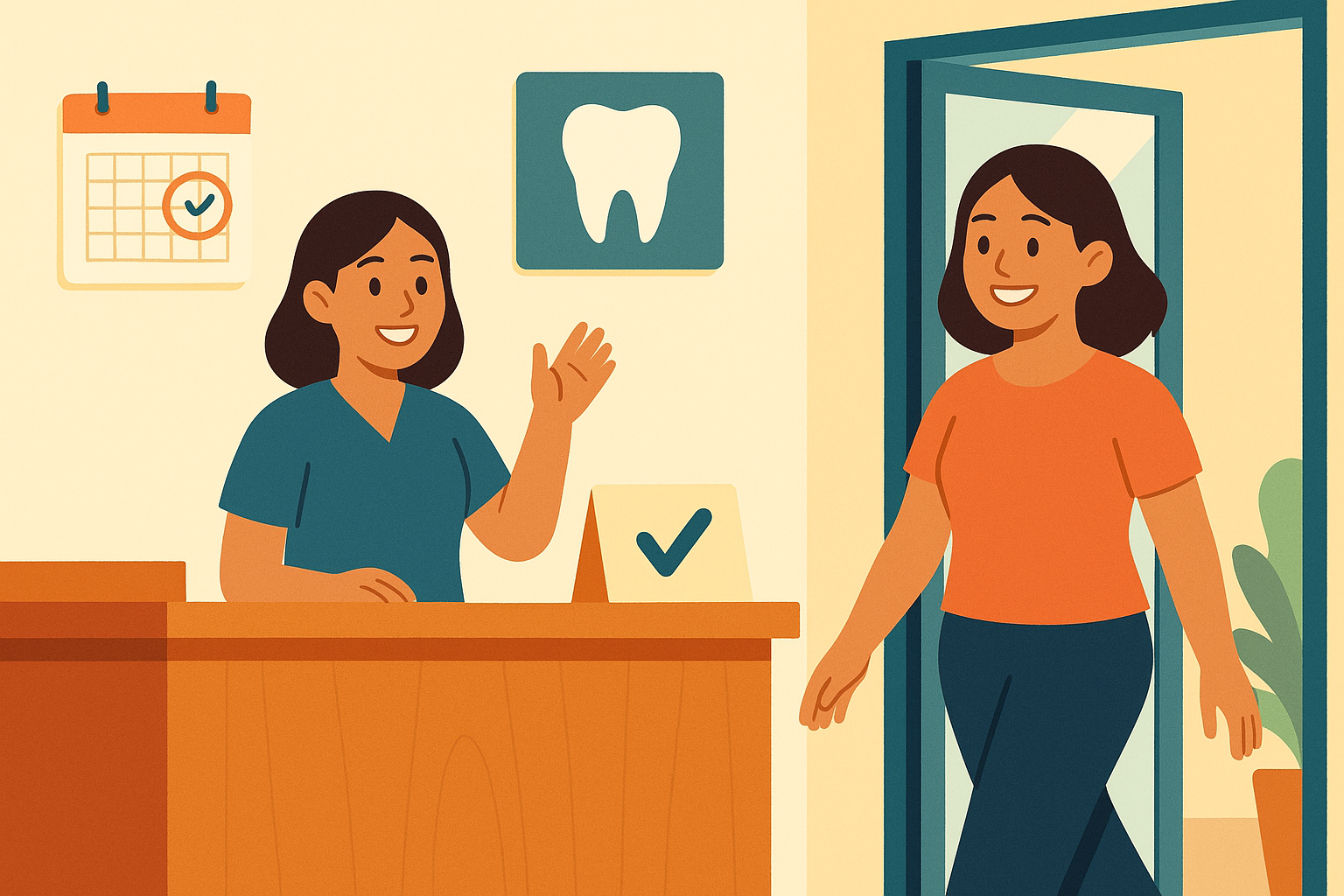
Ms Reyes came in for a cleaning. Jen at the front desk handed her the receipt, thanked her, and reminded her about brushing before bed. She walked out happy. Nobody wrote down when she should come back. Nobody messaged her the next day. Six months later the clinic ran a "we miss you" campaign, and Ms Reyes never opened it.
That's not a rare story. In most Philippine dental clinics, the first-time patient is treated as a completed transaction the moment they pay. The second visit, the one that turns a customer into a real patient, is left to chance.
The one number to watch
If you only measure one thing about retention, measure this: the percentage of first-time patients who book a second appointment within six months. Not who came back eventually. Who booked within six months.
Six months matters because it lines up with the standard cleaning cadence, and because after that the patient has quietly decided you were a one-off. Getting them back after six months takes a real reactivation campaign; keeping them before then costs a text message.
Track that number for a quarter and it'll tell you what to fix. If it's above 60 percent, the machinery below is polish. If it's below 30 percent, you have a leaking bucket and the marketing you're running to fill it is money on the floor.
Why the second visit is different from every other visit
A patient who has visited you twice behaves nothing like a patient who has visited once. They tolerate a schedule change. They bring their spouse. They defend you in the Facebook group when someone complains about a wait. They accept a small price increase without shopping around for another clinic.
None of that is true of the first-timer. They're still deciding. Every touch between the first visit and the second one is either evidence that this is their clinic, or evidence that it isn't.
So the goal isn't to sell them anything. It's to keep proving, at a light and unpushy cadence, that you noticed they were there.
The first six months, by touch point
Here's the smallest system that reliably moves the number. Five contacts. None of them feels like marketing to the patient. All of them can be done by one person with a calendar, or handed off to an automation.
Before they leave the clinic
This is the single highest-leverage moment in the whole retention story, and most clinics skip it.
While Ms Reyes is at the counter paying, Jen asks: "Kailan po ba tayo next check-up, six months from now?" If Ms Reyes says yes, book it in the calendar right there. If she isn't sure of her schedule, offer a booking link on her way out and text it to her right then.
An on-the-spot booking isn't a soft promise. It's a slot on the calendar with her name on it. Patients who leave with a booked next appointment come back at a meaningfully higher rate than patients who leave with a "we'll message you when it's time", and it costs nothing to ask.
If the patient hesitates or genuinely doesn't know, don't pressure them. Move to the next step and use the messages below.
Day 1: a thank-you with one useful thing
Twenty-four hours after the visit, send one SMS. Not an email, not a Messenger blast, one text.
The message thanks them, gives them one specific piece of aftercare, and links to a booking page. It doesn't ask for a reply, because most Philippine clinics send SMS through Semaphore, which is send-only and can't receive one.
A working sample, well inside the 160-character GSM-7 budget:
Smile & Skin Clinic: Salamat, Ms Reyes! Aftercare: iwas malamig at maasim na inumin sa loob ng 24 oras. Book next visit: smileskin.ph/b
The sender ID is SmileSkin, nine characters, inside the eleven-character cap Philippine SMS providers enforce. Never sign with "REMINDERS" or another generic word; local carriers block those on registration and filter them if they slip through.
Two things make this message earn its keep. It proves you remember what they came in for, which no other clinic in their inbox is doing. And it hands them a link, so if they change their mind about coming back on a Sunday morning, they can act on it right then. For more shapes of these messages, our SMS templates for dental clinics post has a wider set.
Week 2: only when the treatment warrants it
A cleaning doesn't need a follow-up. A filling, a new night guard, or the start of orthodontic treatment does.
The check-in is one line: "How's the new filling feeling?" plus the booking link if something is off. You catch small problems before they turn into an emergency visit somewhere else, and the patient hears from a clinic that treats them like a person rather than a receipt.
Send this only when there's a genuine clinical reason. A blanket week-two message for every patient reads as automation, because it is. For the full mechanics of the post-visit workflow, see how to automate patient follow-ups.
Month 3: the halfway nudge, only for the ones who didn't book
Split the list. Patients who booked their next visit at the counter get nothing. Patients who left without a booked slot get one soft nudge at the three-month mark.
The line is deliberately light: "Halfway to your next cleaning already. Book anytime:" and the link. No urgency, no discount, no guilt. It's a bookmark, not a pitch.
Month 6: hand off to the recall system
By six months the first-timer becomes a normal recall patient and joins whatever machinery you already run for cleanings and check-ups. If you don't have one yet, automating dental patient recalls is where to start.
The whole thing on one page
| When | What | Why it works |
|---|---|---|
| At the counter | Book the next visit before they leave | An on-the-spot booking beats every message you can send after they leave |
| Day 1 | Thank-you + aftercare + booking link | Proves you remember them by name and by treatment |
| Week 2 | Clinical check-in, only for treatments that need one | Catches small issues before they walk to another clinic |
| Month 3 | Halfway nudge, only for the ones who didn't book at the counter | A bookmark, not a pitch |
| Month 6 | Handoff to the standard recall | They're a returning patient now, treat them like one |
Common mistakes that quietly lose patients
- Waiting six months for the first contact. By that point they've already found another clinic near the office. The Day-1 message is where the relationship is either kept or ended.
- Only sending recalls, never a thank-you. Every message a patient gets from you shouldn't be a request. A thank-you costs the same to send and does more.
- Signing SMS with generic sender IDs. "REMINDERS", "INFO", "CLINIC" and similar words are blocked by Philippine carriers on registration or filtered as spam. Use the clinic's short name, up to eleven characters.
- Asking the patient to reply. "Reply YES to confirm" is a habit copied from overseas systems. Semaphore, the SMS provider most Philippine clinics use, can't receive replies. The reply goes into a black hole and the patient sees the clinic as broken. Use a booking or confirmation link instead.
- Shortened links from bit.ly or tinyurl. Carriers routinely drop these. Use a link on your own domain, or a booking-system link with your clinic name in it.
- Long, chatty messages. If a text spills into a second SMS segment (over 160 GSM-7 characters, or 70 if the message contains a special character like ñ), you pay double per patient and the reader trims out. Count.
Two changes for this month
If everything above feels like a lot, pick the two that move the number the most:
- The counter ask. Whoever handles the payment asks about the next visit and books it if the patient says yes.
- The Day-1 SMS. One message the day after, with a thank-you and a link.
Run those two for three months. Count the percentage of first-time patients who came back within six months. Compare it to the three months before. The number will move, and the two changes above cost about the price of the SMS credits.
Where OtterFlow fits, if you want it handled
The five-touch system works whether you run it by hand or automate it. Running it by hand takes a spreadsheet, a set of SMS templates, someone tagging the payment list every evening, and someone else remembering not to send the Day-1 message to the patients who booked at the counter. That's doable for a two-chair clinic. It falls over at four chairs.
OtterFlow is built for exactly this. When a first visit is marked complete in the calendar, the Day-1 aftercare goes out with the correct booking link and the clinic's own SMS sender ID. If the patient later replies to the clinic on Messenger asking about aftercare or scheduling, OtterFlow answers from what the clinic has approved, in the language the patient wrote in (English, Taglish or Bisaya), and offers a booking on a time that's genuinely open. Patients who didn't rebook at the counter get the three-month nudge. Patients who did are not messaged twice. At six months they roll into the recall list.
None of that changes the two things above: someone still has to ask at the counter, and the aftercare note still has to say something useful. Automation isn't a substitute for those, it's a way of not forgetting to send them.
The bottom line
Most first-time patients who never come back didn't leave because of the treatment. They left because nobody asked them to come back. Ask at the counter, send one thank-you the next day, and split the follow-up by whether they already booked. Count the number, and let it settle for a quarter before you judge it.
If you want the messages timed, the links pointed at real slots and the whole thing handled without adding a person to the front desk, book a 15-minute call and we'll walk through your current numbers together.